When planning a new commercial electricity connection, one of the earliest – and most important – decisions is the Point of Connection, often shortened to PoC.
It’s a term that comes up very quickly in discussions with the network operator, but it’s not always fully understood at that stage. That’s understandable – it sounds like a technical detail. In reality the choice of PoC can have a significant impact on cost, programme, and long-term flexibility for a site.
Making the right decision early can save time and money. Getting it wrong can lead to restrictions, redesigns, or avoidable upgrade costs later on.
What is a Point of Connection?
In simple terms, the Point of Connection is the location and voltage level at which your site connects into the existing electricity network.
It determines
- whether the connection is Low Voltage (LV) or High Voltage (HV)
- where ownership changes between the network and the site
- what infrastructure is required on and off site
The PoC is typically offered by the Distribution Network Operator (DNO) as part of the connection process, but there may be multiple technically viable options. Choosing between them is not just a network decision – it needs to reflect how the site will actually operate.
This is explored further in our article on the LV to HV tipping point on commercial developments.
LV vs HV – what’s the difference?
Low Voltage (LV) connections
LV connections are typically at 400V and are common for smaller commercial sites.
They are generally suitable where
- overall demand is modest
- site layouts are straightforward
- there is limited need for future expansion
Advantages of LV connections include
- simpler infrastructure
- fewer on-site assets to manage
- lower initial complexity
However, LV connections do have limitations. Capacity is finite, and once you are close to the upper end of what LV can deliver, future changes become difficult without further network works.
High Voltage (HV) connections
HV connections operate at higher voltages and are used where site demand exceeds what LV can reliably supply.
HV is typically appropriate for
- larger commercial or industrial developments
- sites with significant electrical plant or process loads
- developments with phased growth or future expansion plans
An HV connection will usually involve:
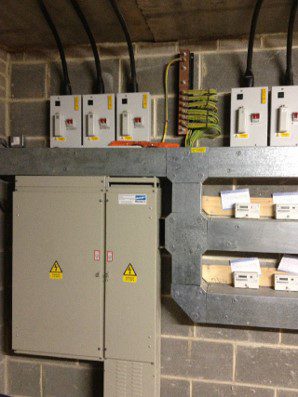
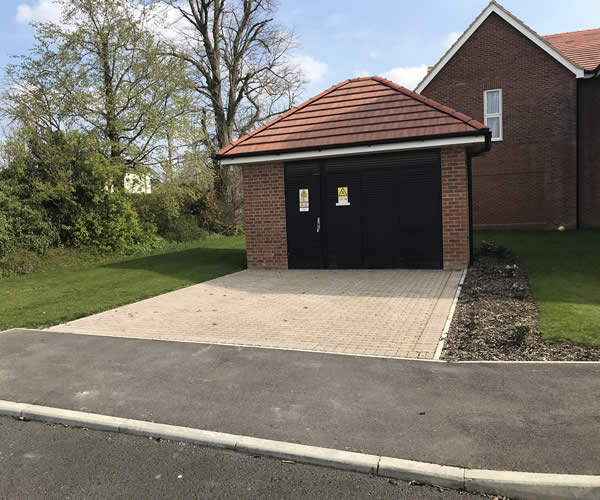
- a site substation
- transformers stepping down to LV for local distribution
- additional protection and metering arrangements
While HV connections involve more infrastructure, they also provide greater capacity and flexibility, which can be crucial over the lifetime of a site.
How site demand influences the Point of Connection
One of the most common issues I see is PoC decisions being made before site demand has been properly understood.
It’s important to distinguish between
- installed load – the sum of connected equipment
- maximum demand – what the site is actually likely to draw
- diversity – the fact that not everything runs at once
If demand is underestimated, a site may be pushed into an LV solution that quickly becomes constrained. That can lead to
- reinforcement works shortly after occupation
- expensive retrofits
- operational limitations
Conversely, understanding demand early can justify an HV solution that is more appropriate long term, even if it appears more complex at first glance.

Cost versus long-term flexibility
It’s natural for cost to be a key consideration when choosing a PoC, but upfront connection costs shouldn’t be the only factor.
An LV connection may look cheaper initially, but it can limit
- future process changes
- additional tenants
- electrification or plant upgrades
HV connections often provide
- headroom for growth
- better resilience
- clearer separation of site and network responsibilities
In many cases, the most cost-effective solution over the life of the development is not the cheapest one on day one.
Common mistakes when choosing a PoC
Some recurring issues I encounter include
- selecting LV purely to reduce initial costs without understanding demand
- fixing the PoC before the site layout and phasing are clear
- assuming the PoC choice can be easily changed later
- overlooking future expansion or changes in site use
These aren’t poor decisions – they’re usually made due to limited information early on. The key is recognising the importance of the decision and allowing time for it to be assessed properly.
How the PoC fits into a new electric connection project
The Point of Connection doesn’t exist in isolation. It needs to be considered alongside:
- network capacity assessments
- route planning and access constraints
- site layout and substation positioning
- programme and construction sequencing
Addressing the PoC early, and in the context of the wider project, helps avoid rework and unexpected constraints later.
Selecting the correct Point of Connection is one of the early steps we manage when delivering new electric connections for commercial developments, ensuring the solution is appropriate not just for today, but for how the site will operate in the future.
The Point of Connection is just one part of a much wider process that can influence the overall programme for a development.
We explore the wider factors affecting delivery times in our article on why electricity connections take so long on new developments.
FAQs
Can a Point of Connection be changed later?
It can be, but changes often involve additional network works and cost, particularly if the original connection was designed close to its limits.
Who decides whether LV or HV is required?
The network operator will confirm what is technically available, but the choice between viable options should be informed by how the site will operate.
Is HV always more expensive?
Not necessarily. While infrastructure costs are higher, HV can avoid future reinforcement costs and limitations.
About the author
Andy Shadwick is a utility connections consultant specialising in commercial and industrial electricity connections across the UK. He works with developers, consultants and contractors to plan and deliver new electric connections, helping projects avoid delays, unnecessary cost and long-term capacity constraints.